
Breaking News
 May 26
by James Thornton
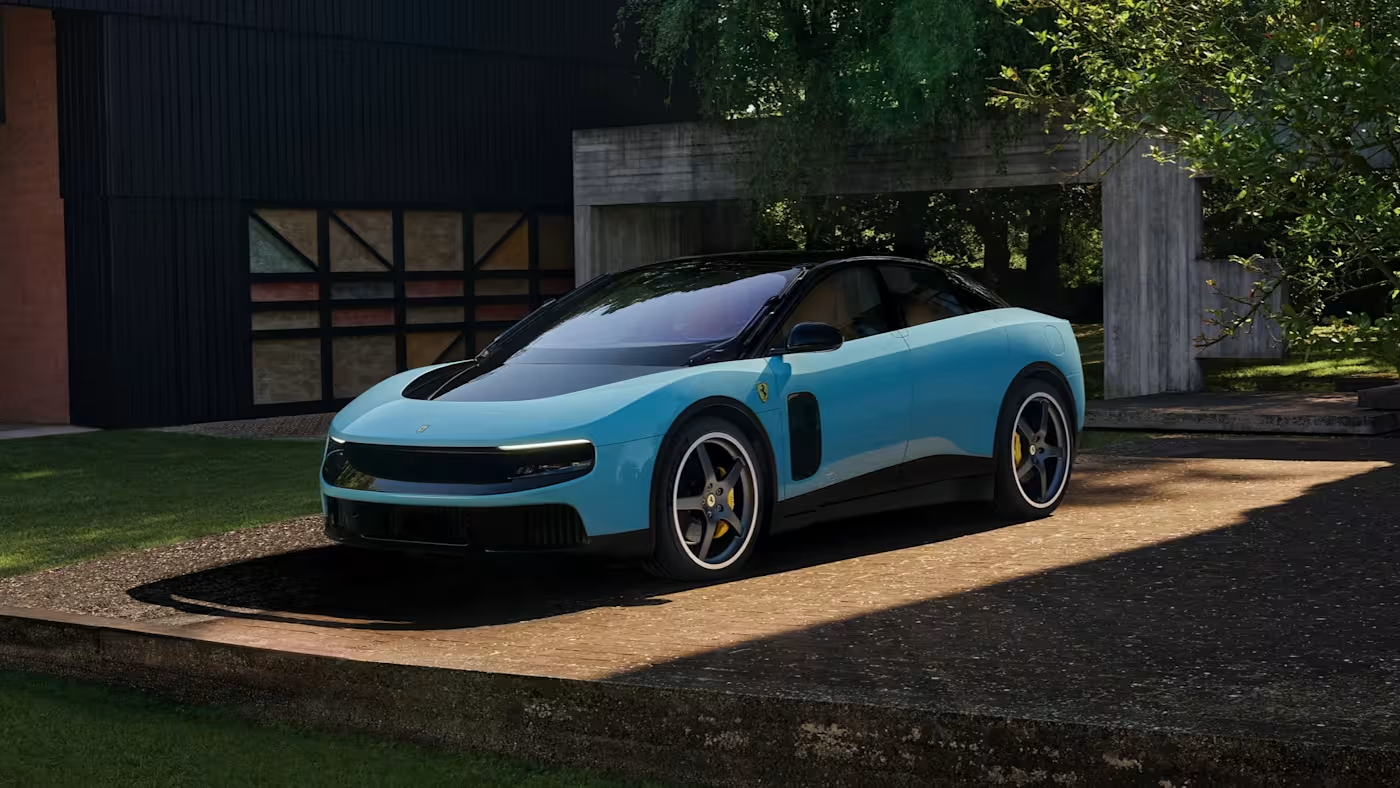
Ferrari unveiled the Luce, its first fully electric vehicle featuring over 1,000 horsepower, futuristic design collaboration with Jony Ive, and luxury grand touring performance.
Ferrari has unveiled its first fully electric vehicle, the Luce, in what is one of the biggest transformations in its history. The launch took place in Rome, where Ferrari presented the car as a major step into the electric era while still preserving the brand’s identity and performance heritage. The Luce is priced at around $640,000 and is expected to begin deliveries in late 2026 and early 2027 in some markets. The company described the vehicle as a blend of grand touring practicality and hypercar-level performance. The Luce is Ferrari’s first five-seat electric model and introduces a very different design philosophy from the company’s traditional combustion-engine supercars. Ferrari developed a completely new electric platform for the car, supported by a dedicated EV factory as part of a broader investment in electric mobility. Despite skepticism surrounding luxury EV demand, Ferrari leadership insisted the Luce represents an expansion of the company’s future rather than a replacement for its petrol-powered models. Performance remains central to the vehicle. Reports stated that the Luce produces more than 1,000 horsepower through four independent electric motors. Ferrari said the car can accelerate from 0 to 62 mph in around 2.5 seconds while reaching speeds above 190 mph. The car also includes a battery capable of more than 300 miles of range, though Ferrari emphasized driving dynamics and emotional engagement over maximum efficiency.
One of the biggest talking points surrounding the Luce is Ferrari’s collaboration with former Apple design chief Jony Ive and his creative collective LoveFrom. Ive and designer Marc Newson worked closely with Ferrari to create both the exterior and interior of the vehicle. The result is a design many described as futuristic, minimalist and heavily inspired by Apple’s approach to technology products. The exterior features a glass-heavy “glass house” structure combined with smooth aluminum surfaces designed to improve aerodynamics. Ferrari reportedly achieved its lowest drag coefficient ever with the Luce. Several publications described the styling as unusual and even polarizing compared to Ferrari’s traditional aggressive sports-car appearance. The vehicle’s overall shape has been compared to a shooting brake, wagon and luxury grand tourer rather than a conventional supercar. Inside the car, Ive moved away from touchscreen-heavy layouts common in modern EVs. Instead, the Luce combines OLED displays with physical switches, rotary dials and tactile controls intended to preserve the emotional connection between driver and machine. Ferrari and LoveFrom said they wanted the cabin to feel more human and less digital. Materials such as leather, polished steel, anodized aluminum and strengthened glass were used throughout the interior. Reports also highlighted a glass gear selector and analog-inspired controls as standout features of the cabin.
Ferrari acknowledged that one of the biggest challenges in building an electric Ferrari was maintaining the emotional experience traditionally associated with the brand. To address this, the Luce includes an “external amplification system” and vibration technology designed to simulate the feel and sound of a combustion engine. Ferrari reportedly used mechanical sounds from the rear axle and processed them into unique audio feedback that changes depending on drive mode. Executives said the company wanted to avoid creating an EV that felt silent or disconnected from the driving experience Ferrari customers expect. The Luce therefore focuses heavily on sensory feedback, steering precision and handling characteristics. Reports stated that the car uses four-wheel steering, advanced torque vectoring and active suspension systems to improve agility despite the vehicle weighing more than two tons. Ferrari engineers also developed much of the powertrain in-house rather than relying heavily on outside suppliers. The Luce also reflects Ferrari’s attempt to attract a broader customer base. Some reports indicated that many attendees at the launch event were not existing Ferrari owners, suggesting the company hopes the vehicle will appeal to younger and more technology-focused luxury buyers. Ferrari also sees opportunities in markets where EVs are more common, especially China. Even as fears of slowing EV demand ripple through the auto industry, Ferrari executives expressed confidence that the Luce will help solidify the company's future positioning.
The automotive industry has reacted quickly and strongly to the Luce’s debut. Some analysts called the project one of the most daring transformations ever undertaken by a traditional performance car maker. Others wondered if Ferrari’s customers would embrace a fully electric vehicle, especially at such a high price. Many articles pointed out how competitors like Lamborghini and Porsche have slowed or amended their EV strategies amid weaker-than-expected market demand. Ferrari, meanwhile, seems committed to continuing its investment in electric technology while maintaining combustion and hybrid models alongside the Luce. Company leadership described the EV as an additional chapter in Ferrari’s history rather than a departure from its identity. Chairman John Elkann reportedly viewed the Luce as an opportunity to redefine electric luxury performance while opening the brand to new audiences. The launch also highlighted Ferrari’s growing partnership with LoveFrom and Jony Ive. Reports stated that Ferrari gave Ive’s design team significant creative freedom during the development process. The collaboration represents one of the most high-profile automotive projects undertaken by Ive since leaving Apple. Many observers described the Luce as potentially the closest realization yet to an “Apple car” concept, combining luxury design, advanced technology and minimalist aesthetics into a single vehicle.

James Thornton is a U.S. business reporter covering markets, technology, and economic policy.
 Newsflash: