Find the filer, client and period
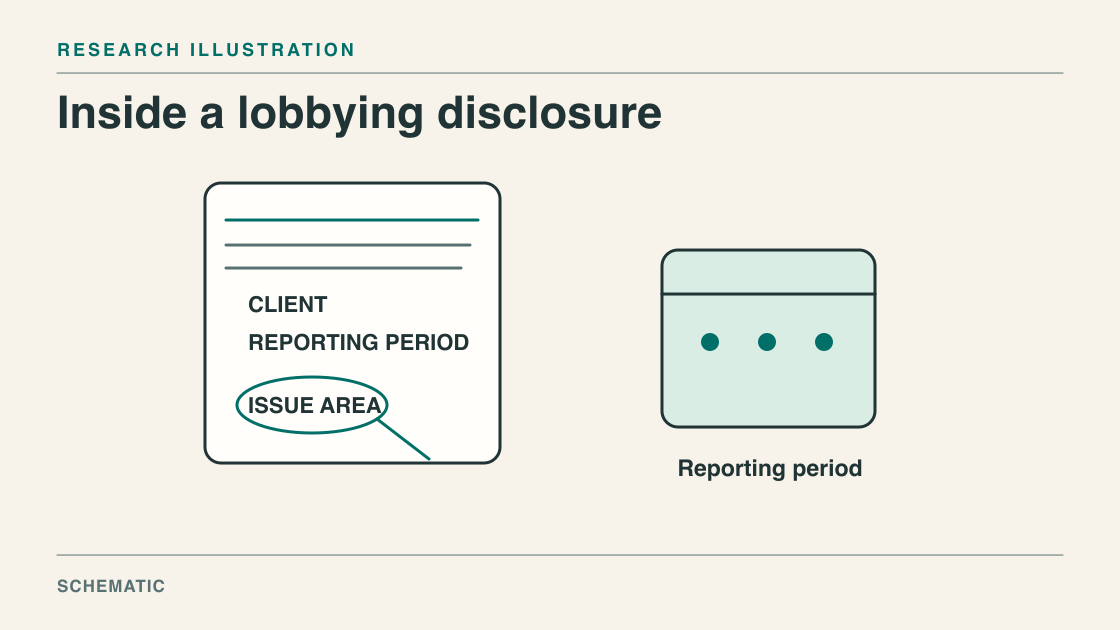
A news story says a group reported two million dollars in federal lobbying and links to a disclosure. Before you repeat the number, identify the kind of record it points to. Open Registrations & Quarterly Activity Reports on LDA.gov. The House Clerk’s transition page links to this federal search. A registration tells you about the registered relationship. The quarterly activity report, known as an LD-2, covers a reporting period and provides more detail about the activities and amount reported. The filer and client can be different names when an outside firm works for a client. An organization lobbying on its own behalf can appear in both fields, so the two labels are still useful when the names match. [1] [2] [4]
Read the year and quarter alongside the name. A report covering July through September can appear in October because quarterly filings are generally due 20 days after the end of the quarter, or on the next business day if that date falls on a weekend or holiday. A report can also be amended later, so the posting date alone is a poor proxy for when the activity occurred. If you are checking an old screenshot, search the client and registrant separately and confirm that the selected row has the right period and status. Save the filing identifier or link as well as the visible date. Those details make it possible for someone else to retrieve the same record even after a search result moves to a different page. [1] [2] [4]
Read below the broad issue code
A code such as banking or transportation is a way to group topics. The useful evidence is often the text underneath it. The House Clerk’s filing instructions call for a description of the specific issues lobbied that quarter. A bill number or a repetition of the broad issue code gives too little detail. One issue description can identify a bill, a section that mattered to the client or an action by an executive agency. Copy the bill number, name and Congress if you can find them. Bill numbers are reused across Congresses, so an identifier that appears exact can send you to a different measure if you ignore its date or session. [1] [2] [3]
The report can also name the chamber of Congress or federal agency contacted. Treat that field at the level of detail it provides. A reference to the House of Representatives does not identify every office involved or prove that a particular member agreed with the filer. Similarly, an issue description can show that a proposal was discussed without clearly stating a position for or against it. If you want to check what the bill said, pull the relevant official version and note whether you are reading the introduced or later text. If you want to know how the filer described its position, look for a separately attributable statement or letter. [1] [2] [3] [7]
For a worked example, imagine that a report lists a housing bill and mentions two specific sections, while a second report for the same client refers to agency rules under an existing law. Both can appear under a broad housing issue code. A search for the bill number would be useful for the first report and could miss the second. A search for the code might find both, but it would tell you less about what the filer reported doing. The most useful note retains the specific phrase and the filing that supplied it. [2] [3] [4]
From a filing to a supported claim
- Identify the filing
Write down the registrant, client, quarter and filing identifier.
- Read the issue text
Use the specific description and check the bill or agency reference.
- Label the amount
Record the filing total and whether it is income or expenses.
- Verify the outcome
Check the official bill history or agency decision separately.
Keep the amount attached to the report
Read the field label before comparing figures. For an outside firm, the number is generally a good-faith estimate of its reportable lobbying income from the client. For an organization lobbying for itself, the field generally reports lobbying expenses under its selected reporting method. The LD-2 uses a “less than $5,000” category for reportable amounts below that figure. For $5,000 or more, filers provide a good-faith estimate rounded to the nearest $10,000. The law has separate thresholds for registration. The amount on the form summarizes reportable income or expenses for the quarter, which may be earned or incurred before payment. [1] [2]
A published example puts the fields side by side. American Electric Power’s copy of its third-quarter 2025 LD-2 shows $410,000 in lobbying expenses on the cover. A later page uses the energy issue code and lists H.R. 3616, the Reliable Power Act of the 119th Congress, alongside other bills and topics. The Government Publishing Office’s record confirms the bill number, Congress and introduced version. Finding that bill on the energy page does not make the cover figure a bill-specific expense. The same report covers multiple issue pages, and the example supplies no breakdown assigning part of that total to one measure. A report found through two different issue searches is still one report for the purpose of adding filing totals. [2] [5] [8]
Compare records without counting twice
For a trend over time, decide whether you are following a client’s disclosures, an outside firm’s client work or a specific issue. Those are different comparisons. Keep the same scope across the periods you are comparing and look for an amendment before adding rows together. An organization’s reported expenses can include money paid to outside lobbying firms, and an outside firm can separately report income from that same client. Adding the two figures without checking their definitions can count the same activity twice. Keep a separate field for the reported method and for whether the record is an original filing or an amendment. [1] [2] [3] [4]
A search for a bill title is a useful starting point, but filers can use different spellings, abbreviations or descriptions. Try a bill number, title phrase and known registrant or client name as separate searches before concluding the database contains no result. A filing marked no activity is a reported status for a period, not proof that the organization had no other public affairs work. The reporting system also separates quarterly activities from the contribution reports filed on a different form. If your question is about a campaign contribution, a quarterly lobbying total is the wrong field to treat as a payment record. [2] [3] [4] [6]
Keep your search criteria with any spreadsheet you make. For example, record whether you matched a title in the issue field, used a particular quarter or included amendments in the export. A search that starts from one phrase is not a complete count of everyone working on the topic. Other filings may use different descriptions. The law defines which contacts with federal legislative or executive officials and related work qualify as lobbying activity. State disclosure records answer a separate question. Treat the results as the set you can reproduce from those choices, and use the filing identifiers to explain which rows you included. [1] [2] [4]
Verify what happened outside the filing
Once you have identified the disclosure, open the record that can answer the outcome question. For legislation, find the text of the correct bill and version, then look for the relevant legislative action in the official history. For an agency action, look for the agency record, public docket or final decision referenced by the filing. Put the date of that action next to the lobbying report’s period. A date in the same quarter can put the events in sequence, but the disclosure is a record of reported activity. It cannot establish that the lobbying changed a vote, caused an agency decision or was the only input officials received. [1] [2] [7]
A precise summary often fits in two sentences. Say which registrant filed on behalf of which client, the reporting period, and the issue described. If the amount matters, call it the quarterly amount reported and say whether the filing identifies it as income or expenses. Use a separate sentence and source for a bill’s progress. Keep the official filing identifier and the version of the legislative record you used. That gives readers a way to check the claim without asking them to infer a meeting, position or result from a search row. It also makes later corrections easier if the filing is amended. [1] [2] [4] [7]
Common questions
What is the difference between the client and the registrant?
The registrant files the disclosure. The client is the party for whom lobbying is performed. An organization acting for itself can appear in both fields. [1] [2] [4]
Does a named chamber tell me who was contacted?
The listed chamber or agency identifies the institution reported in that field. The field does not provide a complete list of individual meetings. [1] [2]
Why can two records describe the same work?
An organization may report expenses that include outside lobbying fees, while its lobbying firm reports income from the client. Treat those fields separately. [2]
Sources & further reading
- [1] Lobbying Disclosure Act reporting provisions
Title 2, section 1604 specifies the federal quarterly report and fields for clients, issues and amounts.
- [2] Joint Lobbying Disclosure Act guidance
House and Senate guidance explains quarterly reports, issue descriptions, estimates, methods and amendments.
- [3] House Clerk instructions for LD-2 issue pages
Explains lines 15 through 18, including the distinction between a general issue code, the specific issues lobbied and the institution contacted.
- [4] House Clerk notice linking to the current LDA.gov portal
The transition notice links to LDA.gov. The old House site continues to offer past filing downloads.
- [5] American Electric Power’s third-quarter 2025 LD-2
The filer’s public copy shows $410,000 in quarterly expenses on its cover and lists the Reliable Power Act among many energy issues on a later page.
- [6] Office of the Clerk lobbying reporting guide
Identifies the federal registration, quarterly activity and contribution-reporting systems and resources.
- [7] GovInfo guide to congressional bills
The Government Publishing Office identifies Congress, bill number and official versions for checking a legislative reference.
- [8] GovInfo record for H.R. 3616, Reliable Power Act
The Government Publishing Office identifies the 119th Congress and the bill as introduced in the House.
Method & limitations
This guide follows the U.S. Lobbying Disclosure Act, joint filing guidance and the public search gateway. The dated example uses a copy of the quarterly filing made public by the filer. The article separates what the report says from what can be checked in a legislative or agency record.