
June 23, 2026
June 23, 2026
Breaking News
 March 23
by James Thornton
Asian shares fall as Iran tensions rise after Trump remarks
Asian shares fall sharply as Iran tensions escalate after Trump remarks, pushing oil prices higher and triggering global market volatility.
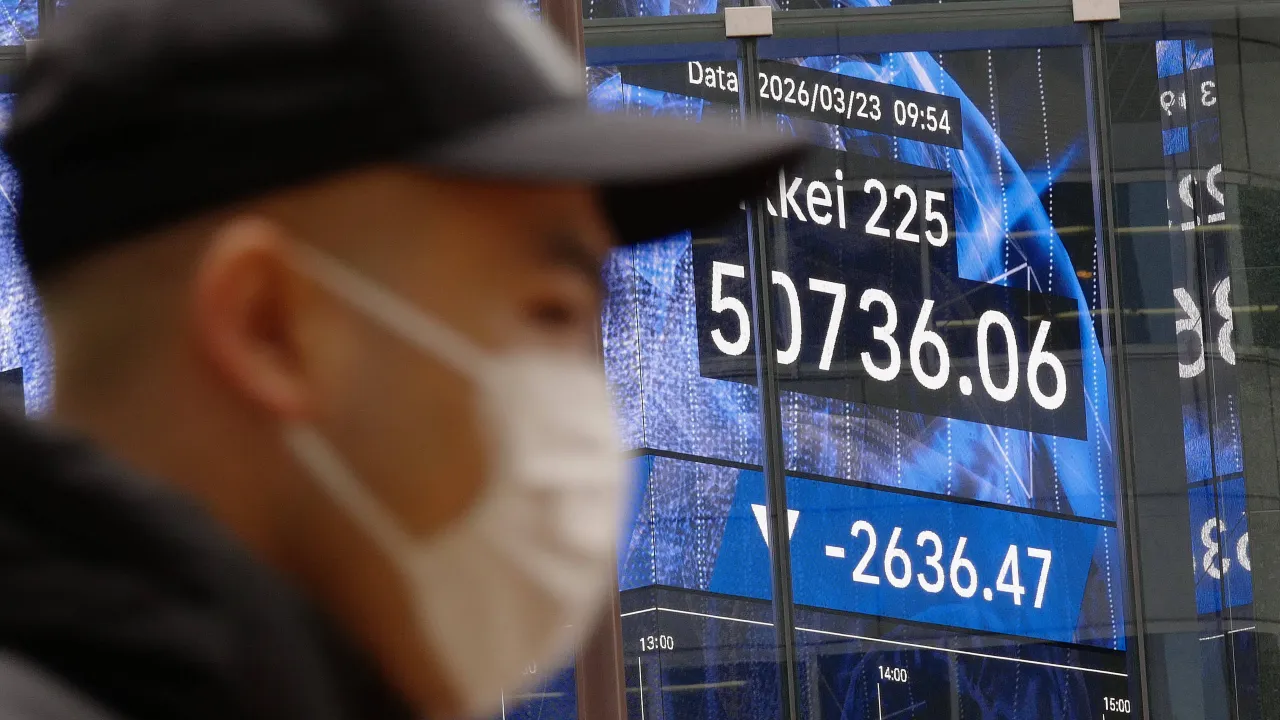
Asian stock markets started the week off badly on March 23, 2026, since investors were anxious about the US and Iran's escalating tensions. The number dropped down after President Donald Trump said some unpleasant things that made it less likely that a swift diplomatic solution would be reached. As worries rose that oil supply lines around the world would be cut off, investors rushed to safer assets. This made big Asian stock indexes plummet a lot. The Strait of Hormuz is a major shipping route for oil around the world. People are even more frightened about the rising cost of energy, inflation, and the overall effect on the stability of the world economy because it is so unpredictable.
Asian Markets React to Rising Geopolitical Tensions
Asian markets went down all over the place as investors become increasingly nervous about politics. The Kospi in South Korea, the Nikkei 225 in Japan, and the Hang Seng in Hong Kong all fell a lot. This shows that most people were trying to stay safe. After Donald Trump said something that made it look like he was going to be tougher on Iran, a lot of individuals in the market became more careful. They were afraid that affairs in the military could get worse. People who put money into stocks withdrew back and put it into safer assets like gold and government bonds because they didn't know what would happen.
Oil Prices Surge Amid Supply Disruption Concerns
One of the first effects of the rising tensions has been a big jump in oil prices around the world. Brent crude prices went over $110 per barrel because many were worried that any problems in the Strait of Hormuz could make it very hard to get oil around the world. Asian economies, which rely a lot on imported energy, are especially sensitive to these kinds of price hikes. Higher oil prices make it more expensive for businesses to run, and they also cause inflation, which makes it harder for the region's economy to recover.
Global Markets and Economic Risks Intensify
Global financial markets, not just those in Asia, have been affected by the unstable geopolitical situation. Wall Street and European indices also went down as investors thought about how much risk they were taking. Analysts say that if tensions last too long, stagflation could happen. This is when prices go up while the economy grows more slowly. Central banks have a very hard time with this because they may have to keep interest rates higher for longer, which would push back the expected return to normal monetary policy.
Strait of Hormuz Remains a Critical Flashpoint
The Strait of Hormuz is one of the most important oil transport routes in the world, and that's where the problem is. Because it carries about a fifth of the world's oil supply, this small canal is very vulnerable to political unrest. In this area, a blockade or military war could cause supply lines to break down, energy prices to rise quickly, and global markets to become less stable. Tensions are rising, and governments, investors, and energy markets around the world are still watching the Strait closely.
Outlook...
The market will probably continue sluggish for a while because of events going on throughout the world. Investors will pay particular attention to what diplomats say, how oil prices fluctuate, and how the world's top central banks respond to changes in policy. If things keep going worse, the economy and the markets could be impacted considerably more. But if there are signs of de-escalation or talks, it might assist the markets and give investors greater faith.

James Thornton is a U.S. business reporter covering markets, technology, and economic policy.
 Newsflash: