
Breaking News
 May 19
by James Thornton
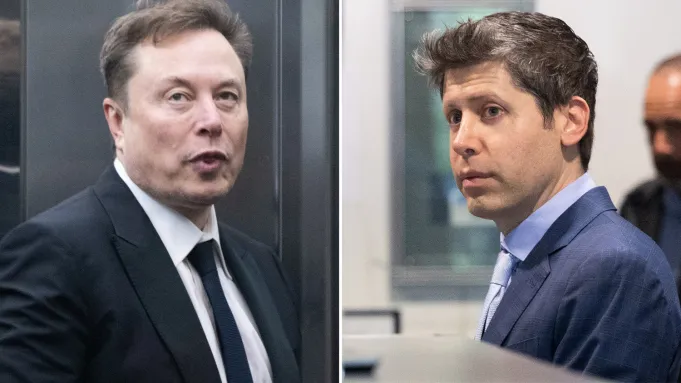
A federal jury rejected Elon Musk’s lawsuit against OpenAI and Sam Altman, handing the AI company a major legal victory in a closely watched Silicon Valley battle
A federal jury in Oakland, California, rejected Elon Musk’s lawsuit against OpenAI, CEO Sam Altman, and company president Greg Brockman after finding that Musk filed his claims too late under the applicable statute of limitations. The verdict marked a major legal victory for OpenAI in one of the most closely watched technology cases in recent years. Musk had accused OpenAI and its leadership of abandoning the organization’s original nonprofit mission to develop artificial intelligence for the benefit of humanity. The lawsuit alleged that Altman and OpenAI improperly transformed the company into a profit-driven enterprise while accepting billions of dollars in outside investment, particularly from Microsoft. The nine-person jury unanimously concluded that Musk knew about OpenAI’s evolving corporate structure and business activities years earlier but waited too long to file the lawsuit. Jurors reportedly deliberated for less than two hours before delivering the verdict. Following the verdict, U.S. District Judge Yvonne Gonzalez Rogers dismissed all remaining claims against OpenAI and its executives. Musk had sought damages potentially exceeding $150 billion and also requested that Altman be removed from OpenAI’s leadership. The lawsuit became one of the most prominent legal battles involving artificial intelligence governance, corporate control, and the future direction of OpenAI. The case also highlighted the increasingly bitter rivalry between Musk and Altman after both men helped co-found OpenAI in 2015. OpenAI welcomed the decision and argued the jury’s ruling confirmed the company acted lawfully while continuing its mission to develop advanced AI systems responsibly. Microsoft, which was also named in the lawsuit, similarly praised the outcome after jurors found the company not liable. The verdict therefore represented a decisive courtroom defeat for Musk and cleared a major legal obstacle facing OpenAI as it continues expanding its influence across the artificial intelligence industry.
The courtroom battle reflected years of escalating tension between Elon Musk and Sam Altman over the direction and control of OpenAI. Musk helped found the organization alongside Altman and other technology leaders in 2015 before leaving the company in 2018 after internal disagreements. Musk argued during the trial that OpenAI betrayed its founding principles by shifting toward a profit-oriented structure and accepting enormous investments from corporations such as Microsoft. His lawyers described the company’s evolution as a “stealing of a charity.” OpenAI’s defense team strongly rejected those allegations, arguing that Musk fully understood the company’s commercial ambitions before departing and that the organization needed outside funding to compete in the rapidly advancing AI industry. The legal fight also exposed broader personal and business rivalries between Musk and Altman. Since leaving OpenAI, Musk launched his own competing artificial intelligence company, xAI, which directly challenges OpenAI in the race to develop advanced AI systems. Court documents and trial testimony showed that OpenAI’s early years were marked by numerous arguments over management, fundraising, AI safety and business strategy. Musk repeatedly said that Altman put profits and power ahead of the public good and AI safety concerns. Altman and OpenAI said Musk’s lawsuit was an attempt to hinder a major competitor, not a genuine effort to defend OpenAI’s founding mission. OpenAI had previously countersued Musk, saying he was harassing them and using unfair competitive tactics. Following the decision, Musk criticized the verdict on social media and said he would continue to fight OpenAI through appeals and public criticism. Reports said his legal team planned to challenge the decision even though the jury unanimously ruled in their favor. The dispute has therefore evolved into one of Silicon Valley’s most consequential and personal rivalries, shaping debates about artificial intelligence, corporate power, and the future of advanced AI development.
The verdict significantly strengthened OpenAI’s position at a critical moment for the artificial intelligence industry. Analysts said the decision removed a major legal threat that could have complicated OpenAI’s plans for future fundraising, restructuring, and potential public-market ambitions. OpenAI has rapidly become one of the most influential companies in artificial intelligence following the explosive success of ChatGPT and other AI systems. The company has attracted tens of billions of dollars in investment while expanding partnerships across technology, cloud computing, and enterprise software. The lawsuit had created uncertainty surrounding OpenAI’s governance structure and commercial future. Musk argued the company’s for-profit partnerships violated agreements made during its nonprofit founding period, potentially threatening future corporate restructuring plans. Analysts said the jury’s decision reassured investors and strengthened confidence in OpenAI’s long-term strategy. Reports suggested the company could eventually pursue an IPO or broader restructuring as competition intensifies across the AI sector. The case unfolded during an intense global AI race involving OpenAI, Google, Anthropic, Meta, Microsoft, Amazon, and Musk’s own xAI. Competition has accelerated dramatically as companies spend billions building advanced models, AI infrastructure, and computing systems. OpenAI recently announced it would retain nonprofit oversight while still operating large commercial subsidiaries and partnerships. That hybrid structure became a central issue during the trial, with Musk claiming it violated the company’s original mission. Technology analysts argued the verdict allows OpenAI to continue focusing on product development and expansion without the immediate threat of major court-ordered governance changes or financial penalties. While the trial cemented OpenAI’s status at the forefront of the AI race, it also sparked fears over the concentration of corporate power and the outsized influence of a handful of tech giants.
The trial has sparked a broader public debate about the regulation of artificial intelligence and who should control some of the world’s most powerful new technologies, beyond the personal battle between Musk and Altman. Musk framed his lawsuit as a fight for AI safety and public accountability, arguing that the shift to a profit-driven model could lead to dangerous concentrations of technological power in private companies and their investors. Musk’s supporters said the commercialization of artificial intelligence has been moving faster than public oversight and ethical safeguards have been able to keep up with. Critics of OpenAI warned that advanced AI systems could create huge economic, political, and social consequences if they are primarily controlled by profit-driven corporations. The court case examined internal emails, fundraising conversations, governance fights and concerns about AI safety and control of the organisation. Legal experts said the legal battle was a symptom of the lack of clear rules so far for the development of advanced artificial intelligence. Governments around the world are wrestling with how to develop regulatory frameworks as AI companies rapidly increase their capabilities and commercial clout. Some commentators saw the trial as a sign of broader worries over the concentration of technological power in a few billionaire executives and companies shaping the future of artificial intelligence, while others saw the dispute as primarily a business rivalry dressed up as an ethical conflict. The verdict may have wrapped up Musk's immediate legal challenge, but wider debates over AI governance, safety, transparency and corporate control are likely to intensify as artificial intelligence becomes more integrated into the global economy and society.

James Thornton is a U.S. business reporter covering markets, technology, and economic policy.
 Newsflash: