
June 8, 2026
June 8, 2026
Breaking News
 April 24
by Morgan Blake
DOJ Probe Launched into Handling of Jeffrey Epstein Files
The DOJ faces a new probe into its handling of Jeffrey Epstein files, examining transparency, privacy concerns, and errors in document releases.
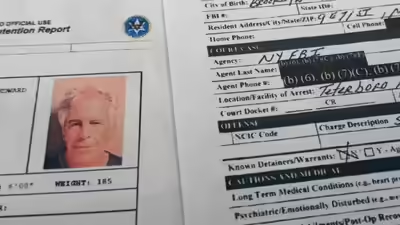
The Justice Department's internal inspector announced a probe Thursday of the department's compliance with the statute requiring the release of the Jeffrey Epstein files, delving into a highly charged subject that has dogged the Trump administration for the past year. The inspector general's office will conduct an audit on how the department collected, reviewed, and redacted materials in preparation for their release, as well as its process for dealing with concerns raised after the files were made public, when Epstein survivors claimed that personal information about them had been disclosed. The study will look into the department's slow and inconsistent distribution of millions of records from the Epstein sex trafficking probe. President Donald Trump officially nominated Don Berthiaume, a long-time lawyer in the department's watchdog agency, to be inspector general. He will do the audit. The Office of Inspector General said it would look at how the DOJ finds, redacts, and releases records as required by law.
Why This News Matters:
At the heart of this is a simple question: can people trust how something this sensitive was handled? The U.S. Department of Justice was under pressure to be transparent about the Jeffrey Epstein case — but in trying to release everything, it may have exposed details that should’ve stayed private. For survivors especially, that’s not just a mistake, it’s deeply personal.
Legal Mandate and File Release Process
The Epstein Papers Transparency Act became law in November 2025, when President Donald Trump signed it. It required the Justice Department to make all papers related to Epstein and his co-conspirator Ghislaine Maxwell, who was in jail, public within 30 days. The government released files in inconsistent batches, making almost three million pages available to the public via an online database. However, officials first disclosed only a subset of the documents before the 30-day deadline, later noting the discovery of a huge number of new materials. There are around six million files in all, while some are kept private because they contain survivors' personal information or are linked to ongoing investigations. The law lets some information be kept secret to protect victims and sensitive information.
Errors, Privacy Concerns and Withheld Records
Problems arose during the release procedure. In January, the government published approximately three million pages of material, but later withheld several thousand documents in response to survivors' privacy complaints. The exposed materials included nude images, visible faces, names, email addresses, and other personal information that had not been properly redacted. Officials ascribed the problem to "technical or human error."
Scrutiny also increased after reports that some records involving uncorroborated accusations against Trump were not included in the public release. The department said those documents were “incorrectly coded as duplicative” and were inadvertently omitted.
Political Fallout and Criticism
The release process has drawn criticism from lawmakers and the public, with accusations that the department attempted to protect powerful individuals. The department denied those claims and said it has been more transparent than previous administrations. The issue has remained politically sensitive, contributing to tensions within the Justice Department and broader scrutiny of its actions. President Trump’s dissatisfaction with the situation was cited as one reason for the firing of Attorney General Pam Bondi, who was replaced by Todd Blanche. Lawmakers including Ro Khanna and Thomas Massie have pushed for an independent review of the department’s handling of the files.
Survivor Reactions and Calls for Accountability
Survivors of Epstein's assault have continued to demand accountability and better protections. Annie Farmer, one of the most prominent survivors, slammed suggestions that certain senators may back a pardon for Ghislaine Maxwell in exchange for collaboration. "A pardon is profoundly insulting and a deep betrayal," she said, urging the Justice Department to oppose any such action. Survivors have also expressed concern about how their personal information was handled during the file release procedure. They have urged for additional investigations into persons linked to Epstein and his network.
Ongoing Review and Broader Implications
The inspector general’s review will examine how the department identified, collected and processed Epstein-related records, as well as how it addressed concerns after the release. The watchdog office said it may expand the review if additional issues arise during the audit. The investigation is expected to prolong scrutiny of the Justice Department’s handling of the case. Officials have pledged to release a report on the findings, though such reviews can take years to complete. The case continues to raise questions about transparency, accountability and the handling of sensitive information in high-profile investigations.
What to Watch Next:
Now it’s about what comes out of this review. If it shows bigger failures — not just one-off errors — there could be real consequences and more scrutiny. And more broadly, it could change how the government handles sensitive cases like this going forward.

Morgan Blake is a U.S. investigative journalist specializing in government accountability, corporate misconduct, and public-interest reporting.
 Newsflash: