
Breaking News
 May 5
May 5
by Harper Ellis
U.S. stocks slipped from record highs while oil prices surged amid rising Middle East tensions and disruption in the Strait of Hormuz.
The U.S. stock market fell from its record heights Monday, while oil prices jumped following escalations in the Middle East that may undermine the ceasefire in the war with Iran. The S&P 500 sank 0.4%, coming off its latest all-time high. The Dow Jones Industrial Average dropped 557 points, or 1.1%, and the Nasdaq composite slipped 0.2%. Wall Street dipped early in the day as well, with futures for the S&P 500 down 0.2%, Dow futures losing 0.5%, and Nasdaq futures dipping 0.1%. The market reaction reflected uncertainty fueled by conflicting reports about a possible Iranian strike on a U.S. Navy vessel outside the Strait of Hormuz. The U.S. stock market is still strong and close to its all-time highs, even though things have gotten worse. Investors still hope that the world economy can avoid the worst-case scenario, even though tensions are still high.
This is one of those moments where global conflict starts hitting closer to home. Rising tensions in the Middle East are pushing oil prices up fast — and when oil jumps, it tends to ripple into everything from gas prices to travel and groceries. The fact that markets like the S&P 500 are slipping shows investors are getting uneasy, even if things haven’t fully turned yet.
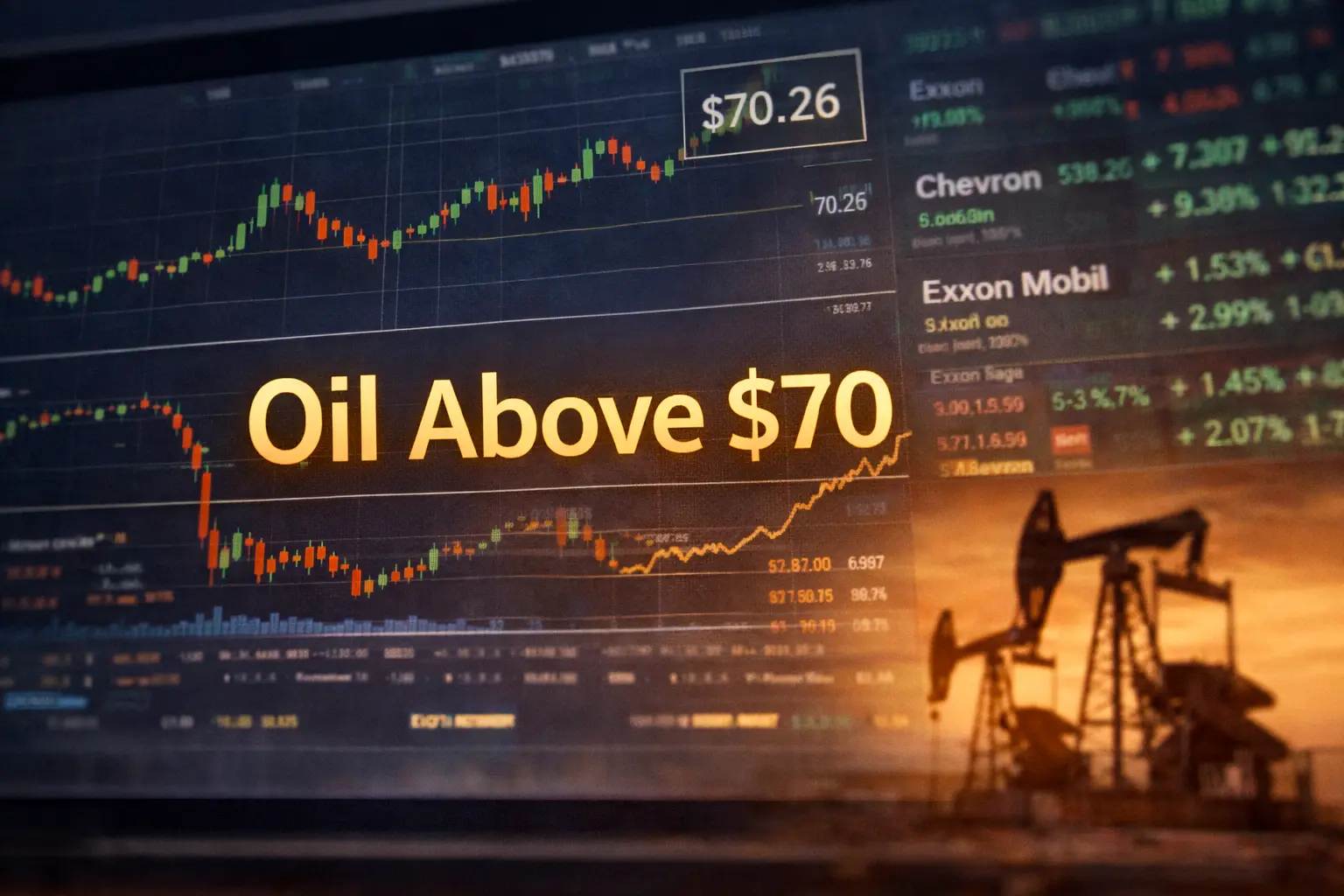
The oil market was more active, with the price of a barrel of Brent crude rising 5.8% to settle at $114.44. It soared when the UAE said it had been attacked by Iran, the first such event since the ceasefire went into effect in early April. Iran's blockage of the Strait of Hormuz has left oil ships stuck in the Persian Gulf, cutting off supplies to global markets and driving up prices from roughly $70 per barrel before the war. President Donald Trump announced that the United States will lead ships across the strait, but ambiguity about the plan kept prices high. The US Navy announced that two American-flagged ships successfully crossed the strait, destroyed six tiny boats and created a "enhanced security area."
Even with uncertainty in the world, corporate earnings have stayed strong. The median stock in the S&P 500 is tracking its best growth since 2021, reflecting broad-based gains beyond major tech companies. Tyson Foods exceeded expectations for both profit and revenue, selling less beef but at prices 11.5% higher while increasing sales of chicken and pork. Its stock rose 8%, helping limit broader market losses. Norwegian Cruise Line Holdings also reported better-than-expected profits but warned that the war is affecting travel demand, particularly in Europe. Its stock dropped 8.6% because it had fewer bookings and problems with its operations. These mixed results show how businesses are dealing with both high demand and the problems that come up when things aren't stable.
Several major companies saw sharp stock movements based on strategic developments. UPS dropped 10.5% and FedEx fell 9.1% after Amazon announced it would expand its logistics services to handle shipping and delivery for large companies like Procter & Gamble and 3M. Amazon’s stock rose 1.4% on the news. GameStop also declined after announcing plans to acquire eBay for $125 per share. Despite building a 5% stake and outlining cost-cutting opportunities, GameStop’s stock fell 10.1%, while eBay rose 5.1%. These changes show how investors' feelings are changing because of competition, corporate strategies, and the market as a whole.
International markets had a mixed day. South Korea's Kospi index went up 5.1% and Hong Kong's Hang Seng went up 1.2%, but European markets fell, with France's CAC 40 down 1.7%. Markets in mainland China and Japan were closed for the holidays. In the bond market, Treasury yields surged in tandem with oil prices. The 10-year Treasury yield rose to 4.43%, raising borrowing prices for homes and corporate loans. Analysts emphasized that much depended on settling the Middle East crisis and reopening shipping lanes in the Strait of Hormuz, which are still crucial to world energy supplies.
The fighting has trapped hundreds of ships in the Persian Gulf, which is putting more pressure on the oil market. Producers have had to cut back on production because they don't have enough room to store it. Thousands of sailors have been stuck at sea, running out of food, water, and other supplies while watching drones and missiles fly around the area. The U.S. has launched “Project Freedom,” involving guided-missile destroyers, aircraft, and thousands of service members to escort ships through the strait, though details remain limited. Markets are still very sensitive to what happens in the conflict, and oil prices and global trade routes are two of the most important things that affect the economy.
Keep an eye on the Strait of Hormuz — it’s the pressure point. If ships can’t move freely, oil could spike even more and markets could react more sharply. Also watch whether stocks bounce back or keep sliding — that’ll signal whether investors think this is a short scare or something bigger.

Harper Ellis is a U.S. investment news reporter covering market strategy, portfolio trends, and major corporate capital moves.
 Newsflash: