
May 27, 2026
May 27, 2026
Breaking News
 feb 21
by Olivia Bennett
Supreme Court Curtails Trump’s Trade Powers in Major Economic Decision
The Supreme Court struck down Trump’s global tariffs, ruling emergency powers don’t allow import taxes. A $133B refund fight and new trade uncertainty follow.
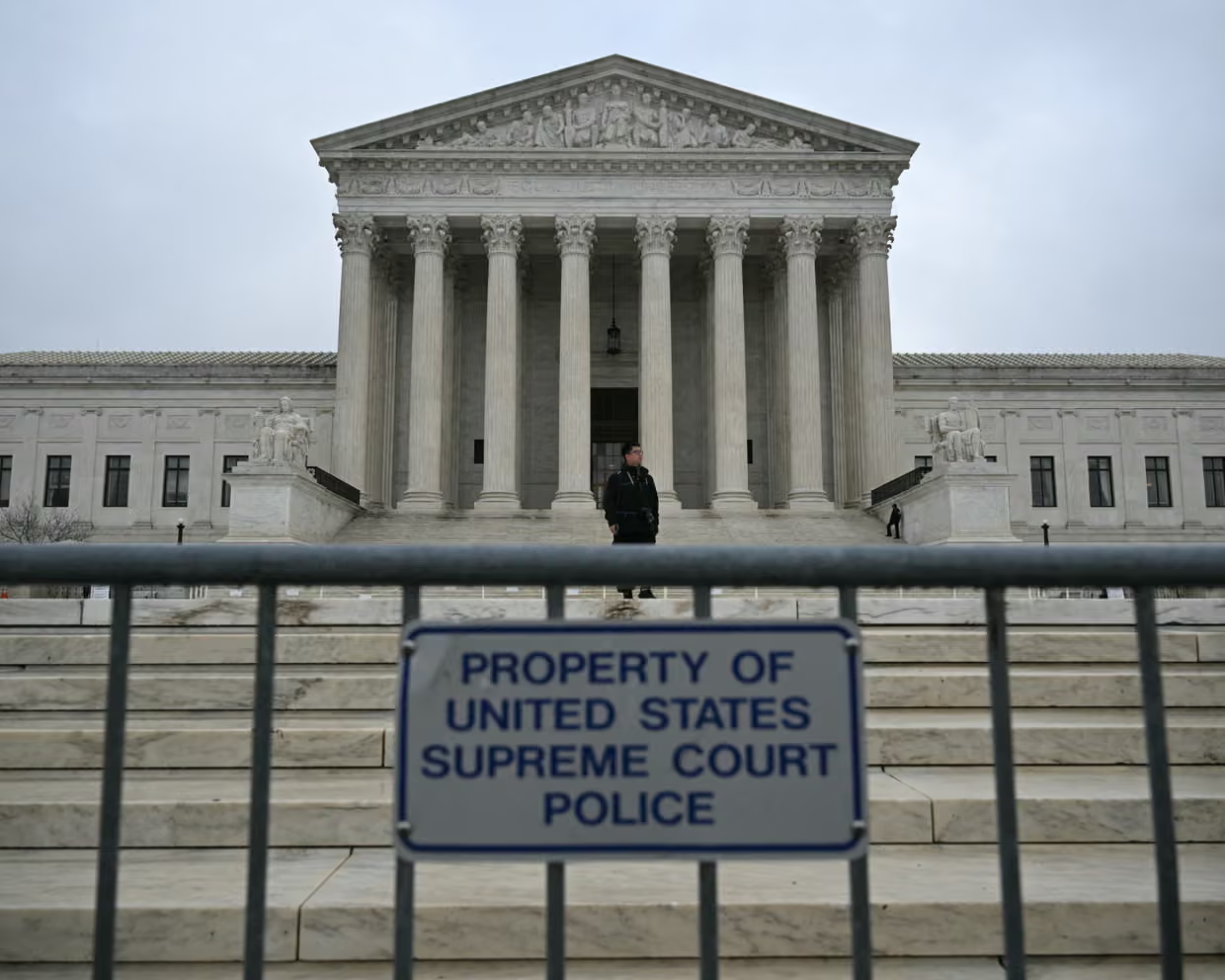
On Friday, the Supreme Court overturned President Donald Trump's most significant and daring tariff increases. In a 6-3 decision, the court concluded that Trump's effort to impose the levies under an emergency powers statute was invalid. Trump levied double-digit tariffs on nearly every country in the globe last year, citing the 1977 International Emergency Economic Powers Act (IEEPA). The Supreme Court concluded that the statute did not authorize the president to tax imports, which is a power reserved to Congress. Lawyers for the contesting states and small businesses argued before the court last year that the president's law imposing the levies made no mention of the word "tariffs". They stated that Congress did not want to give up its taxing authority or give the president broad authority to amend existing trade laws. In his decision, Chief Justice John Roberts stated that when Congress delegated tariff authority, it did so openly and with limitations. Two of Trump's three appointed justices joined the majority in overturning the first major piece of his second-term agenda
Why This News Matters:
The Supreme Court's decision strengthens a key check on presidential power by saying that Congress must approve broad tariffs. It might lower costs for some businesses and make prices less of a problem, but it also makes trade policy and the economy less certain.
Limits on Presidential Power
Donald Trump has acted like a king in Washington for more than a year, threatening and using his power to change the city. The Supreme Court changed that course on Friday without letting anyone know. When the judges threw out the president's main economic plan, they scolded him in public, which is very rare. This showed that the president was no longer in charge. Trump uses tariffs a lot, and that's very clear about his second term. He has threatened tariffs to get what he wants, such as bringing in foreign investment, settling international disputes, and helping some industries. Congress could have made tax laws, but it mostly ignored the issue. The conservative Supreme Court often gave Trump more power, kept him from being sued for things he did as president, and made quick decisions that helped him reach his goals. But the court's decision hurt Trump's long-held claim that he could raise tariffs to help the economy. The verdict made politics even more confusing. The markets were already unstable, foreign allies were nervous, and the elections were coming up.
The $133 Billion Refund Question
The justices did not answer a $133 billion question: what will happen to the money the government has already collected in import tariffs, which have now been declared illegal? As of mid-December, the US customs agency has collected $133 billion in IEEPA duties. Companies have started lined up for refunds, but the path forward might be tumultuous. Importers are likely to receive their money back eventually, though the procedure is expected to be complex and slow. The reimbursement procedure is expected to be handled by a combination of US Customs and Border Protection, the Court of International Trade, and other lower courts. Courts and customs officers have never had to deal with thousands of importers and tens of billions of dollars at once.
According to estimates, refunds might take between 12 and 18 months to arrive. The government may try to shorten the process, presumably using a dedicated system, but importers may have to bear a significant portion of the burden and pursue claims through litigation.
Legal Battles and Claims Ahead
Many corporations, including Costco, Revlon, and Bumble Bee Foods, filed cases seeking refunds prior to the Supreme Court's decision, hoping to be first in line. There are sure to be other judicial battles ahead. Manufacturers may sue for a portion of refunds if suppliers increased prices to cover tariffs. Years of litigation across several jurisdictions are expected. There is precedent for courts to establish refund schemes in trade cases, such as when a harbor maintenance charge was overturned in the 1990s. The customs office already has a method in place for refunding duties in the event of an error, and it may expand on it. Consumers, on the other hand, are unlikely to receive refunds because higher retail prices are difficult to trace back to specific taxes. State authorities are seeking remuneration. Illinois Gov. JB Pritzker wanted reimbursements for consumers, expecting billions of dollars in costs, while Nevada Treasurer Zach Conine requested $2.1 billion to compensate damages for families.
Economic and Trade Implications
Removing IEEPA tariffs could help the economy by lowering inflationary pressures. Like other tax breaks, tariff refunds may boost spending and GDP, but the effects are likely to be small. Trump wants to replace the taxes that were turned down with other legal authority, but most countries still have to pay high U.S. tariffs in some areas. The decision was a big win for businesses and countries that had fought against the tariffs, but it also made the world trading environment much less stable. The tariffs only hurt Mexico, Canada, and China at first. But on what the president called "Liberation Day," they quickly spread to dozens of other trading partners. People were worried that the proposals would raise prices for consumers because businesses would have to pay more in import duties. Alternative laws for putting tariffs in place take longer to pass, need more detailed explanations, and often have deadlines.
Trump’s Reaction and New Tariff Moves
Trump was angry about the decision and insulted the justices who ruled against him, even some of his own nominees. He said that the return issue could go to court for years, maybe even five years. He quickly put in place a new 10% global tariff to replace the ones that were overturned. He called the decision terrible and said the justices were stupid. Trump said from the White House that he would use other laws to keep his tariff plan going, saying that the program encourages investment and production in the US. He said that the decision confirmed his authority and that he might eventually raise taxes even more. Trump said he didn't need to ask Congress for express power, but he thought he could get it if he needed to. He said that the end result would be more money and a stronger economy.

Olivia Bennett is a U.S. political correspondent reporting on federal policy, election developments, and national governance issues.
 Newsflash: