
May 21, 2026
May 21, 2026
Breaking News
 Feb 4
Feb 4
by Casey Quinn
Wall Street Faces Turbulence as Investors Worry About AI's Effect on Big Tech
Wall Street faced loss as AI disruption fears hit tech stocks like Nvidia, Microsoft, and Alphabet. All eyes are on upcoming earnings from Alphabet and Amazon.
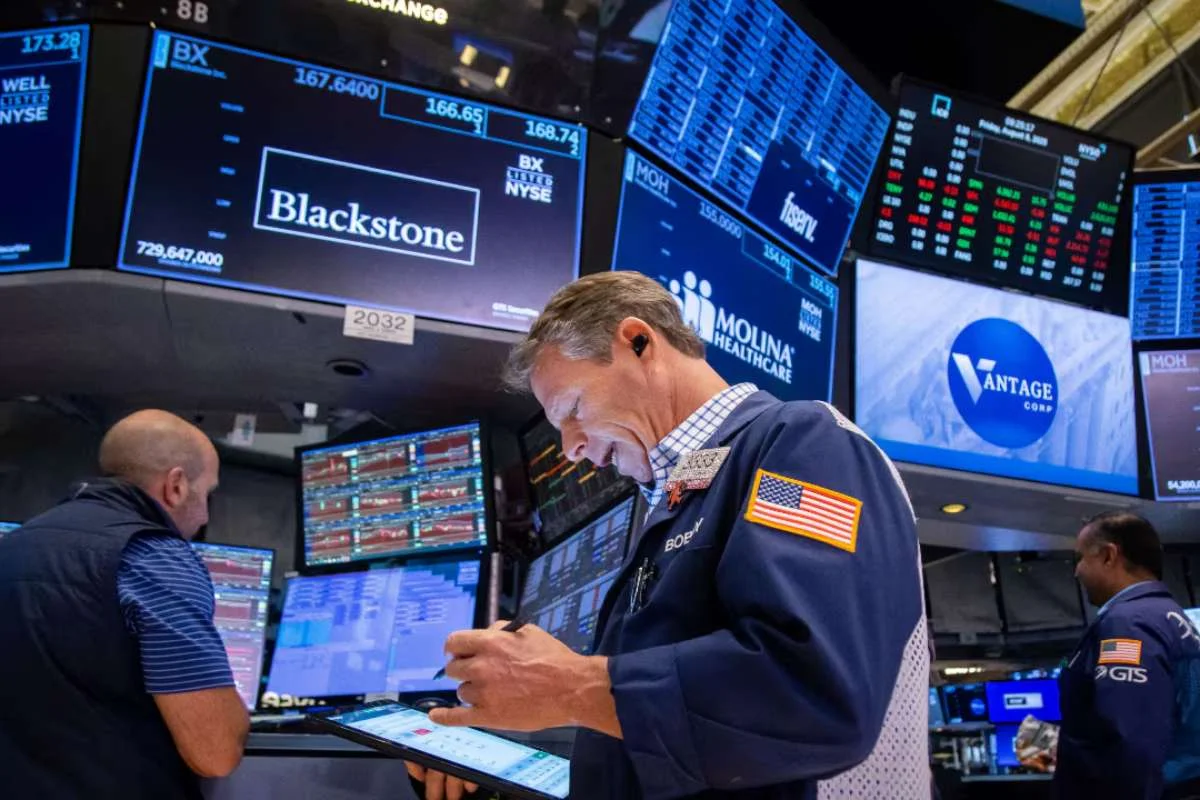
Wall Street closed substantially lower on Tuesday, with investors fearful that AI might increase competition for software companies, keeping them on edge ahead of Alphabet and Amazon's quarterly releases later this week. Nvidia (NVDA.O) and Microsoft (MSFT.O) both sank nearly 3%, while Alphabet down 1.2% ahead of its report on Wednesday, & Amazon (AMZN.O) slid 1.8% ahead of its Thursday report. In recent months, investors have been more picky about AI-related stocks, focused on companies that can generate measurable returns from major investments in AI technology. Wall Street focused on technology companies that may be disrupted by AI breakthroughs. Anthropic's launch of a legal tool for its Claude AI chatbot played a significant role. Art Hogan, chief market strategist at B. Riley Wealth, stated, "We're seeing a lot of software companies across the spectrum getting hit as AI progresses and disrupts their industries." Salesforce, Datadog (DDOG.O), and Adobe (ADBE.O) all down about 7%, Synopsys (SNPS.O) and Atlassian (TEAM.O) fell about 8%, and Intuit (INTU.O) dropped 11%. However, AI data provider Palantir (PLTR.O) defied the trend, rising over 7% on excellent quarterly results. The S&P 500 software and services index (.SPLRCIS) declined 3.8%, marking the fifth consecutive day of declines. "We have an expensive market, and expectations are very high. "Many areas, particularly in AI, are priced for perfection," said John Campbell, senior portfolio manager at Allspring Global Investments.
Why This News Matters:
The recent drop in Wall Street shows that investors are worried about how AI will change the software industry. Major tech stocks like Nvidia, Microsoft, and Alphabet are all feeling the pressure. Investors are worried about AI because it could hurt businesses that can't keep up with emerging technologies rapidly. Not everyone is scared, though. For example, Palantir is going against the trend, which illustrates that not all AI-related stocks are suffering the same challenges. Big corporations like Alphabet and Amazon will soon have to file quarterly reports. Everyone is looking to see how they will deal with this world driven by AI.
Healthcare Sector Pressure and Retail News
Healthcare equities were under pressure, particularly after Novo Nordisk, the producer of Wegovy, warned of a significant drop in yearly sales. Its US-listed shares fell roughly 15%. Eli Lilly (LLY.N) declined 3.9%, while Structure Therapeutics (GPCR.O) sank 6.75%. Walmart (WMT.O) gained roughly 3% to become the first brick-and-mortar retailer to reach a $1 trillion market capitalization. PayPal (PYPL.O) fell 20% after expecting 2026 profit below expectations. Advanced Micro Devices (AMD.O) dropped 1.7% ahead of its quarterly report. Walt Disney (DIS.N) fell 0.2% after naming Josh D'Amaro as CEO, which ended succession concerns. The S&P 500 fell 0.84%, closing at 6,917.81 points. The Nasdaq dropped 1.43%, closing at 23,255.19 points, while the Dow Jones Industrial Average fell 0.34% to 49,240.99 points. Despite the S&P 500's losses, ascending issues outweighed declining ones by 1.2-to-one. After Tuesday's losses, the S&P 500 is up approximately 1% in 2026, while the Nasdaq is flat. U.S. exchanges experienced high trading volume, with 23.5 billion shares traded, compared to an average of 19.6 billion shares over the previous 20 sessions.
Sector Performance and Earnings Expectations
Six of the 11 S&P 500 sector indexes fell, headed by information technology (.SPLRCT), down 2.17%, and communication services (.SPLRCL), down 1.28%. With a quarter of the S&P 500 expected to report results this week, analysts forecast earnings growth of roughly 11% for the December quarter, up from 9% at the beginning of January, according to LSEG data. Pfizer (PFE.N) fell 3.3% despite exceeding fourth-quarter profit expectations, while Merck (MRK.N) gained 2.2% following its results. PepsiCo (PEP.O) rose 4.9% after announcing price decreases for core brands such as Lay's and Doritos. Legislation to prevent a US government shutdown narrowly passed a procedural hurdle in the House of Representatives. The partial shutdown has caused a delay in critical job data, including the JOLTS report, which was scheduled for release on Tuesday. The S&P 500 recorded 81 new highs and 28 new lows, while the Nasdaq saw 202 new highs and 311 new lows.
The U.S. stock market sank in mixed trading, while gold and silver bounced back after their recent sell-off. The S&P 500 fell 0.8%, the Dow Jones dropped 0.3%, and the Nasdaq composite fell 1.4%. Big tech stocks weighed on the market, with Nvidia down 2.8% and Microsoft down 2.9%. These equities have been hurt by fears that their prices have risen too high. Stocks of software companies seen as potential losers to AI competitors also slumped, with ServiceNow falling 7%, bringing its year-to-date loss to 28.3%. On the bright side, Palantir Technologies rose 6.8% after exceeding analysts' profit expectations and forecasting 61% revenue growth this year. Gold prices climbed 6.1%, and silver surged 8.2%, recovering after a sharp pullback in their prices last week. Gold had recently fallen from $5,600 to under $4,500 on Monday, and silver had plunged 31.4% on Friday alone. Analysts suggest that gold and silver prices were bound to fall back due to overbought conditions and expectations that the Federal Reserve will keep interest rates high to fight inflation.
Notable Corporate Earnings and Market Movements
PayPal (PYPL) dropped 20.3% after delivering disappointing quarterly results and replacing its CEO. Pfizer slumped 3.3% despite reporting higher-than-anticipated earnings, but its profit prediction for 2026 was lower than analysts expected. Banco Santander (SAN) shares slumped 6.4% after the company announced the acquisition of Webster Financial for $12.3 billion in cash and equity. PepsiCo rose 4.9% after the company reported better-than-expected earnings and announced price cuts on snacks to attract inflation-weary customers. DaVita surged 21.2% after posting strong quarterly results. The bond market saw the 10-year Treasury yield fall to 4.26%, while the 2-year yield fell to 3.58%.
Global Market Recovery and Economic Conditions
Asian stocks bounced back from big losses in international markets. The Kospi in South Korea rose 6.8%, the Nikkei 225 in Japan rose 3.9%, and stocks in Shanghai and Hong Kong also rose. In Europe, the indexes were mixed, with France's CAC 40 going down a little. Gold and silver prices rebounded following last week’s sharp losses, while crude oil and copper also saw gains. Meanwhile, Bitcoin showed signs of falling toward a critical support level. Given the continuous volatility and quick market swings, analysts believe the present market environment is better suited to aggressive traders than passive investors.

Casey Quinn is a U.S. technology reporter covering innovation, digital policy, and emerging trends in the tech industry.
 Newsflash: