
June 30, 2026
June 30, 2026
Breaking News
 March 30
by James Thornton
Oil Prices Surge as Middle East Conflict Escalates
Oil prices surge above $116 as Middle East tensions escalate, with Houthi missile strikes and Strait of Hormuz disruptions shaking global markets
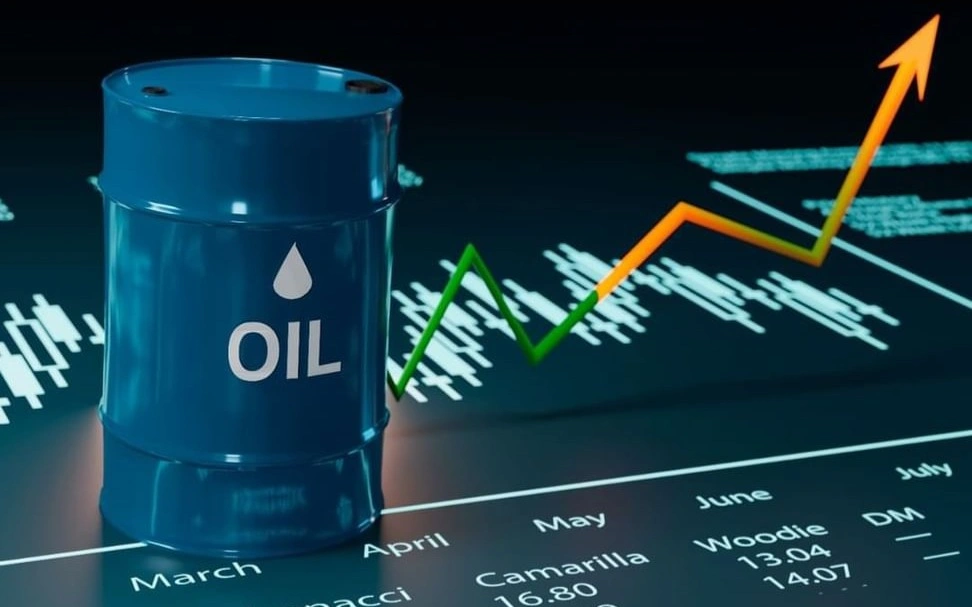
Global oil prices rose and US stock futures fell ahead of Monday's market start, after Iran-backed Houthi terrorists launched ballistic missiles at Israel over the weekend and 3,500 more US troops arrived in the Middle East as the crisis reached its one-month mark. Brent crude oil, the global standard, jumped 3% to more than $116 per barrel, the highest amount since the crisis began, while US crude rose 3% to about $103 per barrel. Oil prices surged after Yemen's Iran-backed Houthis fired rockets at Israel, raising concerns about rising risks to Middle East energy flows. Brent crude prices for May increased 2.47% to $115.35 per barrel, while US West Texas Intermediate futures rose 1.62% to $101.25 per barrel. Brent crude jumped 2.47% to $107.92, while US crude rose 2.94% to $102.57, as Tehran cautioned against an American ground invasion. The battle has resulted in the greatest oil disruption in history, with the blockade of the Strait of Hormuz, through which 20% of the world's oil flows.
Why This News Matters:
This is one of those times when things that happen in other parts of the world start to have an effect on you. When there is conflict in the Middle East, the world economy is very fragile. For example, oil prices went up over $116 and markets fell. When major trade routes like the Strait of Hormuz, which carries about 20% of the world's oil, are blocked, it doesn't just hurt governments and businesses; it also affects everyday things like the cost of living and gas prices.
Market Reactions and Economic Impact
Advanced trading on the three major US stock indexes fell as much as 0.5% Sunday night. Dow futures lost 0.53%, S&P 500 futures dropped 0.46%, and Nasdaq futures sank 0.48%. Average gasoline prices in the United States reached $3.98 a gallon on Sunday, the highest since the summer of 2022. Patrick De Haan predicts that since the crisis began one month ago, US drivers will have spent an additional $10 billion on gasoline. According to Bloomberg, officials and economists are discussing the potential of oil prices rising to $200 per barrel as the greatest oil shock in decades continues. According to Bob McNally, rising oil costs will have a ripple effect on the global economy, with smaller countries being hurt the worst.
Geopolitical Escalation and Energy Risks
Yemen's Houthis said they fired a salvo of ballistic missiles against Israeli military sites, marking their first direct involvement in the US-Israeli battle against Iran. The assault intensifies the clash, a conflict that ignited with the US and Israeli bombings of Iran on February 28th.
The rebels now possess the capability to potentially choke off the Bab al-Mandab Strait, a vital link from the Red Sea to global shipping lanes. David Roche cautioned that a more aggressive American reaction was likely, possibly involving "boots on the ground" and an effort to seize Iran's crucial export hub, Kharg Island. He also cautioned that such an escalation could trigger reprisals against critical infrastructure throughout the Gulf, disrupting key supply routes, including Saudi Arabia's East-West pipeline.
Trump Statements and Diplomatic Developments
Investors have begun to question President Donald Trump's capacity to calm markets in the absence of any progress on the ground. Trump stated that the United States "will make a deal" with Iran and that negotiations are proceeding smoothly, adding that a deal might be reached "soon." He further mentioned that Iran had "given us most of" a fifteen-point plan designed to end the conflict. He also noted that twenty boatloads of oil would be passing through the Strait of Hormuz. In an interview, Trump stated that he wants to "take the oil in Iran," comparing it to the United States' actions in Venezuela. Foreign ministers from Pakistan, Saudi Arabia, Egypt, and Turkey are working to settle the conflict, with Pakistan likely to arrange negotiations between the United States and Iran.
What to Watch Next:
Everything now depends on whether this escalates or cools off. If attacks spread or the Strait stays blocked, oil prices could keep climbing—and that would ripple into inflation and markets worldwide. On the flip side, any real progress in talks or easing of tensions could quickly stabilize things. For now, investors and governments alike are watching the same thing: whether this crisis is about to get bigger, or finally start winding down.

James Thornton is a U.S. business reporter covering markets, technology, and economic policy.
 Newsflash: