Tyson Foods to Close Illinois and Utah Beef Plants, Affecting 3,200 Jobs
Tyson Foods said it will close its beef plant in Joslin, Illinois, and its case-ready meat facility in Eagle Mountain, Utah, affecting about 3,200 jobs across the two sites.

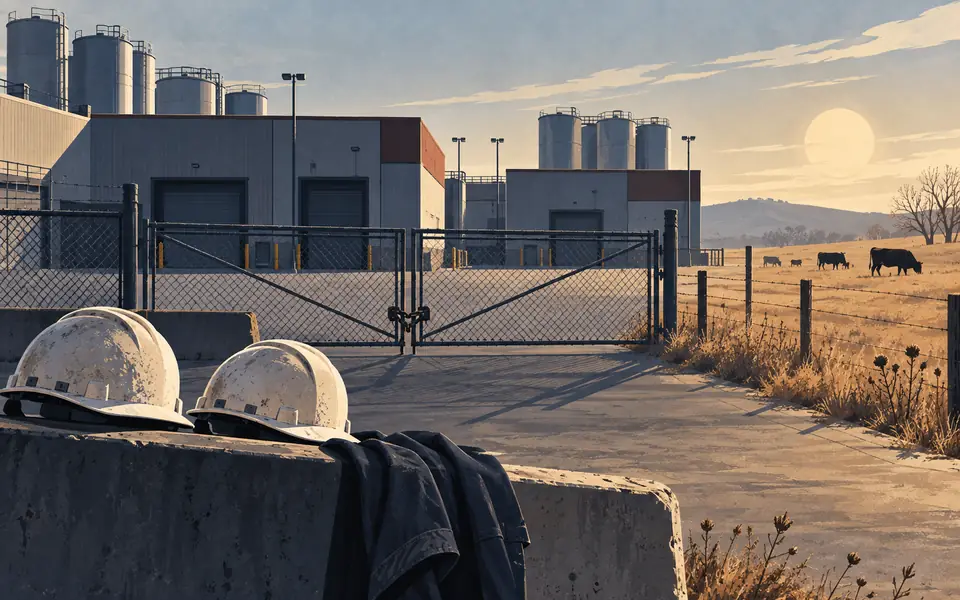
Tyson Foods said it will close its beef plant in Joslin, Illinois, and its case-ready meat facility in Eagle Mountain, Utah, affecting about 3,200 jobs across the two sites. The company is also seeking a buyer for a facility in Pasco, Washington, as it restructures its beef operations amid tight cattle supplies.
The trigger behind all of it is something ranchers have been warning about for a while now: there simply aren't enough cattle. The U.S. herd shrank to about 86.2 million head as of January 1, 2026, the smallest count in nearly 75 years, according to Agriculture Department data. Drought, wildfires, pricey feed, and tighter border access have all chipped away at supply, leaving meatpackers with more processing capacity than there are animals to fill it.
Why Tyson is closing the sites
The Eagle Mountain closure stings in a particular way because of how new the plant is. Tyson opened the facility back in 2021 after pouring in roughly $300 million, backed by state tax incentives, and had projected an annual local payroll of about $44 million. Five years later, on what would have been close to the plant's anniversary, workers instead got notice that their jobs were ending. State filings put the number of affected Eagle Mountain employees at 723.
The closures create immediate uncertainty for workers and their families, including questions about replacement jobs, benefits and household expenses. Those effects will extend beyond the plants to contractors and businesses that depend on employee spending.
The impact in Illinois
The Joslin, Illinois, plant is the larger of the two closures by far. It processes around 3,000 head of cattle a day and employed close to 2,500 people, many of them drawing from towns across the Quad Cities region and surrounding farm country in western Illinois and eastern Iowa. Unlike Eagle Mountain's wind-down, the Joslin shutdown was immediate, and the ripple effects hit contractors almost right away — a sanitation company that serviced the plant laid off more than 100 of its own workers within days.
Tyson says affected employees will keep getting paid through October 12, which softens the initial blow, but it doesn't erase the bigger worry: what happens after that date, especially for workers hired only weeks before the announcement who may not qualify for unemployment benefits in the same way longer-tenured staff would.
Consolidation around fewer plants
Tyson isn't walking away from beef altogether — it's betting on scale instead. The company plans to funnel processing capacity into three facilities it considers more strategically located: Dakota City, Nebraska; Holcomb, Kansas; and Amarillo, Texas. Industry analysts note that some of Tyson's older plants, including ones built decades ago, simply can't compete on efficiency with newer operations coming online, like a recently opened sustainable beef plant in North Platte, Nebraska, or a producer-owned facility still under construction in Amarillo.
This isn't an isolated move, either. Tyson has now closed roughly a dozen facilities since 2023, including chicken plants, a pork plant in Iowa, and an earlier beef plant in Nebraska, cutting more than 10,000 jobs across that stretch. Rival processor JBS shut down its own beef facility in Pennsylvania back in June. Combined, industry watchers estimate the recent wave of closures has removed close to 10,000 daily cattle-processing slots from the national supply chain.
Implications for beef prices and ranchers
For shoppers, the fallout is already showing up at the meat counter, where tight cattle supply paired with steady demand has pushed prices higher over the past year. For the ranching industry, state agriculture officials frame the closures as a wake-up call about the fragility of the domestic herd and the importance of rebuilding it over time, even as they acknowledge there's little comfort in that for the hundreds of families in Utah and Illinois now searching for new jobs.
Sources and further reading: Utah Farm Bureau on the plant closures
About the Author
James Carter
Business Writer
James Carter writes about companies, trade policy, manufacturing, and corporate strategy. He covers earnings, executive decisions, supply chains, and the deals reshaping major industries. His posts link to the public records and source material used for their central claims, and separate company guidance from independently verified figures.